

Becker’s Fall Payer Issues Roundtable: The Next Competitive Advantage Isn’t More Data. It’s Measurable Performance.
Healthcare payers have never had more data, analytics, technology, or AI available to them. Yet for many organizations, achieving meaningful performance improvement remains as difficult as ever. That reality is likely to be reflected throughout the conversations at Becker's Fall Payer Issues Roundtable, where health plan leaders will gather to discuss value-based care, financial performance, regulatory pressures, operational efficiency, and the future role of AI in healthcare.
Becker's positions the event around the financial, regulatory, and value-based care priorities shaping payers today. But beneath those discussions lies a more fundamental challenge. Most health plans are not struggling because they lack information. They're struggling to determine which opportunities matter most, what actions will have the greatest impact, and how to deliver measurable results across increasingly complex organizations.
This challenge is amplified by fragmented data, disconnected systems, specialized teams, multiple lines of business, evolving regulatory requirements, and competing priorities that often span quality, risk, utilization, growth, reimbursement, and member outcomes. For health plans, success is becoming less about generating additional insights and more about improving performance.
The pressure to deliver results is increasing
Every executive team is being asked to do more simultaneously:
- Improve Medical Loss Ratio performance
- Control utilization and specialty drug spend
- Optimize risk adjustment and reimbursement
- Strengthen quality scores and Star Ratings
- Demonstrate value to employer groups
- Improve outcomes for members
- Support value-based care initiatives
Each objective is important on its own. The challenge is that none of them operate independently:
- Utilization affects financial performance
- Provider performance influences quality outcomes
- Social risk impacts intervention effectiveness
- Quality affects reimbursement
- Employer retention depends on a plan's ability to clearly demonstrate value
Improving one area without understanding how it affects other areas often leads to incremental gains that fail to impact overall business performance.
Leading health plans are increasingly recognizing that optimizing individual programs is no longer enough. They need a more complete view of performance across the enterprise.
What health plans really need
The next generation of payer performance is not about adding another dashboard. It is about helping leaders answer these critical questions:
- What opportunities are we missing?
- Which risks are emerging before they affect performance?
- Where should we focus first?
- What actions are most likely to create measurable value?
- How do we prove the results?
These questions are at the center of MedeAnalytics' approach to AI-native Enterprise Decision Intelligence. Rather than simply helping payers understand what happened in the past, MedeAnalytics helps organizations discover opportunities, predict emerging risks, prioritize actions, operationalize those actions, and measure the resulting impact.
The goal is not more analytics. The goal is measurable healthcare performance improvement.
From insight to ROI
One of the biggest frustrations healthcare leaders face today is the gap between identifying opportunities and achieving outcomes.
- A report may uncover unnecessary utilization
- Analytics may identify coding gaps
- A dashboard may highlight declining quality performance
Yet knowing about the problem does not automatically improve results. MedeAnalytics helps close that gap by connecting intelligence, workflows, AI, and operational processes so organizations can move from awareness to action:
- Opportunities can be prioritized based on expected value
- Teams can act through embedded workflows and playbooks
- Performance can be measured against the financial, operational, and clinical outcomes that matter most
That means health plans are better positioned to:
- Improve MLR performance
- Optimize risk adjustment and reimbursement
- Reduce avoidable cost and waste
- Strengthen quality and Star Ratings performance
- Improve employer group retention and growth
- Better manage utilization trends
- Identify emerging risks earlier
- Quantify the ROI of improvement initiatives
These are not technology objectives. They are business objectives.
Let's continue the conversation at Becker's
The conversations taking place at Becker's Fall Payer Issues Roundtable will focus on many of healthcare's most pressing challenges. The organizations that succeed will be the ones that can identify high-value opportunities, act with confidence, and demonstrate measurable performance improvement.
That's the opportunity MedeAnalytics helps make possible.
If you're attending Becker's Fall Payer Issues Roundtable in Chicago, connect with the MedeAnalytics team to discuss how AI-native Enterprise Decision Intelligence can help your organization improve financial performance, optimize operations, strengthen quality outcomes, and turn better decisions into measurable results.

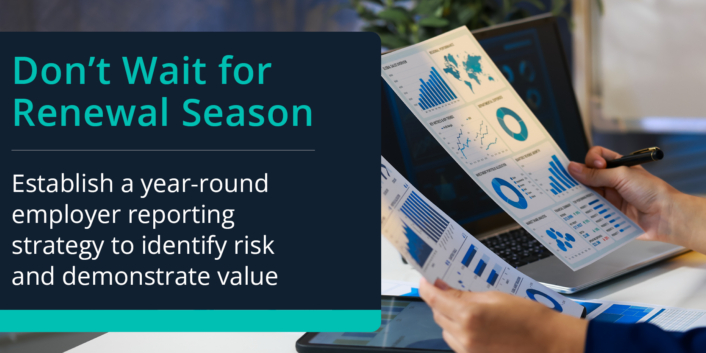
Employer reporting should prepare you for renewal long before renewal season
For many health plans, employer reporting still revolves around a familiar milestone: the renewal meeting. Teams assemble claims data, summarize utilization, explain cost trends, and prepare recommendations designed to demonstrate…

Where Medicare Advantage revenue leaks: The disconnect between RAF, Star Ratings, and MLR
Most Medicare Advantage revenue loss doesn’t show up where finance teams expect it. It’s not a single variance in a report or a clear miss against budget. It’s smaller, compounding gaps spread across risk adjustment, quality performance,…

Becker’s Fall Payer Issues Roundtable: The Next Competitive Advantage Isn’t More Data. It’s Measurable Performance.
Healthcare payers have never had more data, analytics, technology, or AI available to them. Yet for many organizations, achieving meaningful performance improvement remains as difficult as ever. That reality is…

Rural health transformation needs more than funding. It needs measurable results.
Rural health transformation succeeds when leaders can connect investments to measurable improvements in access, quality, cost, and sustainability. Doing so requires connected data, shared performance measures, and visibility across programs…

Why Medicare Advantage member churn is a lagging indicator
By the time a Medicare Advantage member switches plans, the conditions influencing that decision may have been developing for months. Retention problems often begin well before an enrollment period as…

The Medicare Advantage retention gap: Turning member experience into a growth strategy
Growth in Medicare Advantage has become increasingly difficult to sustain. Acquisition costs are rising, competition is intensifying, and members are more willing than ever to switch plans in search of…
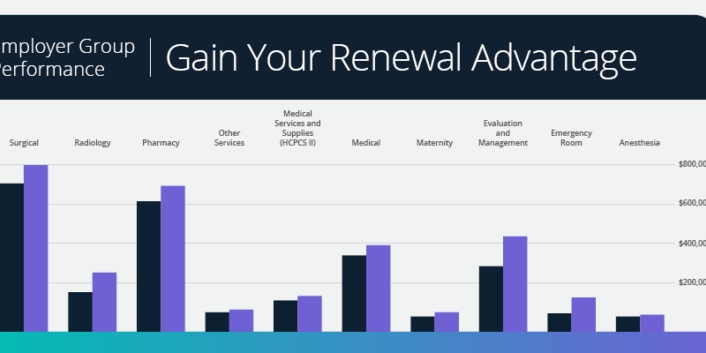
Renewal season is here. Are you defending premiums or demonstrating performance?
Employer healthcare analytics help health plans improve employer group performance Every renewal season, health plans meet with employers to discuss premium increases, review utilization trends, summarize claims experience, and highlight…
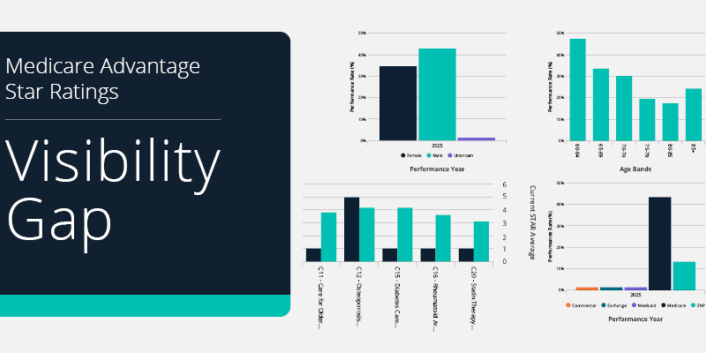
Beyond the recalculation: Building better Stars performance
The decision by the Centers for Medicare & Medicaid Services (CMS) to recalculate certain Medicare Advantage Star Ratings has generated understandable attention across the industry. I recently shared my perspective…

Beyond care gap closure: Rethinking clinical strategy in Medicare Advantage
Closing care gaps has become a core focus for Medicare Advantage plans for good reason. Gap closure directly impacts Star Ratings, quality performance, and reimbursement. It’s measurable, actionable, and tied to clear programmatic goals.…

From awareness to action: Unlocking the financial value of SDOH
Social determinants of health (SDOH) have become one of healthcare’s biggest strategic priorities, but many organizations still struggle with how to operationalize social risk data in a measurable, scalable way. In…