

Why Medicare Advantage member churn is a lagging indicator
By the time a Medicare Advantage member switches plans, the conditions influencing that decision may have been developing for months. Retention problems often begin well before an enrollment period as unresolved issues accumulate and gradually weaken the member’s confidence in the plan.
That distinction changes how plans should think about retention: what they measure, when they intervene, and which teams are responsible for recognizing the warning signs.
In a recent article for Healthcare Business Today, I examined a feedback loop in which provider exits can lead to member churn. That churn adds financial pressure that may further strain provider relationships, increasing the risk of additional network exits and member churn.
The article explores the overall cycle, the warning signs plans may be overlooking, and the role integrated data can play in breaking it. In this follow-up post, I want to examine one implication more closely: If member churn is a lagging indicator, which earlier signals should plans be watching, and where within the organization are those signals likely to surface?
The decision happens before disenrollment
Medicare Advantage plans tend to measure retention when a member decides to leave, yet several experiences may have influenced that decision:
- A trusted physician leaves the network
- A prior authorization delay disrupts care
- Benefits are more difficult to use than expected
- A member disengages from a care management program
These experiences can weaken a member’s confidence in the plan. By the time the member has an opportunity to switch, the chance for the plan to preserve the relationship may already have passed.
Churn confirms a problem but doesn’t explain it
Nearly one in four beneficiaries switched plans during the 2025 Annual Enrollment Period. That level of movement has intensified the focus on retention; however, focusing primarily on the decision to leave can lead plans to address the outcome rather than the conditions that produced it.
Disenrollment is a lagging indicator. It confirms that something went wrong, but it doesn’t necessarily reveal when the problem started, which experience changed the member’s perception, or whether the plan had an opportunity to intervene earlier.
That distinction matters because retention cannot be addressed only during enrollment season:
- Access to care
- Interactions with providers
- Administrative processes
- Benefit experiences
Instead of asking only why a member left, plans need to consider what changed before that member began looking at other options.
The answer may be distributed across the organization
The events leading to churn are rarely visible within a single department or data source:
- A member services team may see an increase in complaints
- A care management team may notice that a member has stopped responding to outreach
- A quality team may identify a missed preventive service
- A network team may know that a provider relationship is under strain
While these developments might not be considered retention events individually, together they can reveal that a member relationship, or even an entire market, is becoming less stable.
This is why retention cannot belong solely to marketing, enrollment, or member experience teams. Network management, provider relations, care management, quality operations, and data strategy influence whether members continue to see value in their plan.
A provider contracting issue can become a continuity-of-care problem. That disruption can then become a member satisfaction problem, which becomes a member retention problem.
If each stage is viewed separately, the connection may not become clear until members leave. To recognize the pattern sooner, plans need to connect clinical, claims, engagement, quality, and provider information so emerging risks can be identified and acted upon.
Recognizing these signals early gives plans an opportunity to intervene before member and provider relationships deteriorate further.
These early warning signs are part of a larger cycle connecting provider exits, member churn, financial pressure, and plan performance. Member churn may be the metric that gets everyone’s attention, but it is often the last signal, not the first.


Where Medicare Advantage revenue leaks: The disconnect between RAF, Star Ratings, and MLR
Most Medicare Advantage revenue loss doesn’t show up where finance teams expect it. It’s not a single variance in a report or a clear miss against budget. It’s smaller, compounding gaps spread across risk adjustment, quality performance,…
Continue reading
Rural health transformation needs more than funding. It needs measurable results.
Rural health transformation succeeds when leaders can connect investments to measurable improvements in access, quality, cost, and sustainability. Doing so requires connected data, shared performance measures, and visibility across programs…
Continue reading
Why Medicare Advantage member churn is a lagging indicator
By the time a Medicare Advantage member switches plans, the conditions influencing that decision may have been developing for months. Retention problems often begin well before an enrollment period as…
Continue reading
The Medicare Advantage retention gap: Turning member experience into a growth strategy
Growth in Medicare Advantage has become increasingly difficult to sustain. Acquisition costs are rising, competition is intensifying, and members are more willing than ever to switch plans in search of…
Continue reading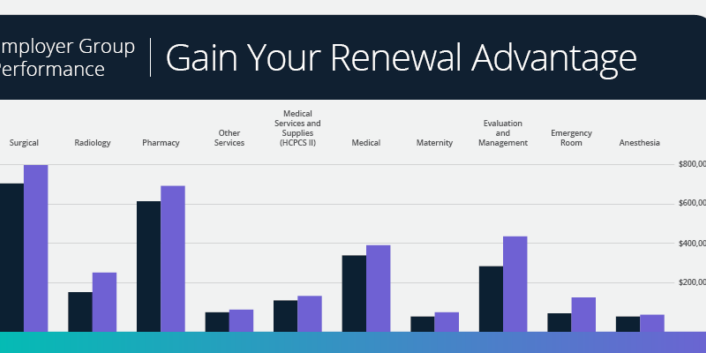
Renewal season is here. Are you defending premiums or demonstrating performance?
Employer healthcare analytics help health plans improve employer group performance Every renewal season, health plans meet with employers to discuss premium increases, review utilization trends, summarize claims experience, and highlight…
Continue reading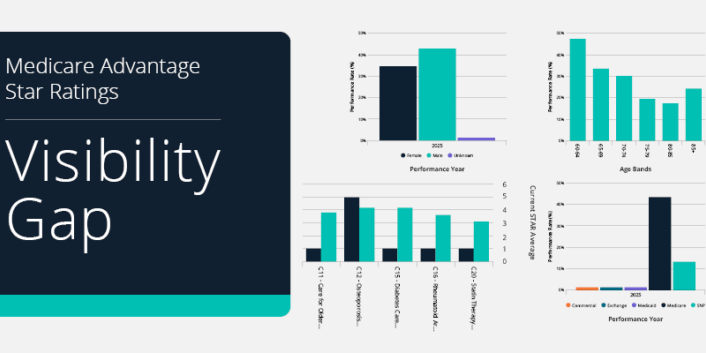
Beyond the recalculation: Building better Stars performance
The decision by the Centers for Medicare & Medicaid Services (CMS) to recalculate certain Medicare Advantage Star Ratings has generated understandable attention across the industry. I recently shared my perspective…
Continue reading
Beyond care gap closure: Rethinking clinical strategy in Medicare Advantage
Closing care gaps has become a core focus for Medicare Advantage plans for good reason. Gap closure directly impacts Star Ratings, quality performance, and reimbursement. It’s measurable, actionable, and tied to clear programmatic goals.…
Continue reading
From awareness to action: Unlocking the financial value of SDOH
Social determinants of health (SDOH) have become one of healthcare’s biggest strategic priorities, but many organizations still struggle with how to operationalize social risk data in a measurable, scalable way. In…
Continue reading
Enterprise analytics for Medicare Advantage: Why unified intelligence is the future of MA performance
Medicare Advantage organizations are facing growing pressure to improve quality outcomes, optimize financial performance, reduce compliance risk, and deliver better member experiences, all while managing increasingly complex operations. Yet many health plans still…
Continue reading
AHIP26: Turning healthcare complexity into measurable performance
Health plans are navigating rising medical costs, intensifying regulatory demands, margin pressure, evolving member expectations, and growing operational complexity, all while being expected to improve outcomes, affordability, and experience. These…
Continue reading