

Beyond the recalculation: Building better Stars performance
The decision by the Centers for Medicare & Medicaid Services (CMS) to recalculate certain Medicare Advantage Star Ratings has generated understandable attention across the industry. I recently shared my perspective in Health Payer Specialist on what the recalculation means for Medicare Advantage organizations.
In this post, I'd like to expand on one of those ideas: health plans can't build their Star Ratings strategy around CMS announcements. The health plans that consistently perform well focus on the operational excellence that drives strong Star Ratings year after year. That process requires more than monitoring scores. It requires connecting data, identifying opportunities early, and acting before performance periods close.
Star Ratings are more than a quality metric
Over the past several years, Star Ratings have become one of the most important indicators of Medicare Advantage plan performance. They influence quality bonus payments, competitive positioning, member growth, and long-term financial performance. A difference of just half a star can have significant implications for revenue, enrollment, and market perception.
That's why Star Ratings are no longer just a quality initiative or an annual compliance exercise. They have become an enterprise-wide business priority that requires alignment across quality, care management, pharmacy, provider performance, member experience, finance, and operations.
Regardless of how methodologies or individual measures evolve over time, organizations that consistently strengthen these core areas will be better positioned for long-term success.
The biggest challenge is visibility
In my experience, one of the biggest obstacles facing Medicare Advantage organizations isn't a lack of data. The challenge is connecting the data they already have.
Star Ratings are influenced by dozens of measures spanning clinical quality, member experience, medication adherence, provider performance, operational efficiency, and regulatory compliance. Yet those insights often reside across disconnected systems and departments, making it difficult to understand which measures need attention, where performance is at risk, and which actions will have the greatest impact.
Without a unified view, organizations are often left reacting to historical reports instead of managing performance proactively.
This is where integrated analytics provides real value. When leaders have timely, connected insights, they can identify emerging risks sooner, understand what's driving performance, quantify the business impact of delaying action, and prioritize the operational interventions most likely to improve Star Ratings and financial performance before opportunities to improve have passed. Visibility alone isn't enough. Leaders need to know which actions will have the greatest impact and why.
The window to improve performance is smaller than you think
By the time Star Ratings are published, opportunities to meaningfully influence many measures have already narrowed.
Closing care gaps, improving medication adherence, strengthening provider engagement, and enhancing the member experience all require sustained effort throughout the year, not just during reporting season.
The challenge isn't understanding what happened after performance periods close. It's identifying opportunities early enough to change the outcome.
Predictive analytics, and increasingly AI-enabled analytics, help organizations move beyond hindsight. Instead of simply reporting historical performance, leaders can anticipate emerging issues, identify members at risk of falling out of compliance, evaluate the potential impact of different interventions, and prioritize the actions that will deliver the greatest operational and financial impact while there's still time to influence outcomes. AI can further accelerate this cycle by connecting disparate data, surfacing opportunities earlier, and helping teams act before performance periods close.
Turning analytics into action
Improving Star Ratings requires more than monitoring individual measures. It requires bringing together quality, finance, risk adjustment, pharmacy, provider performance, member experience, and operational data so every stakeholder is working from the same view of performance.
When organizations align around shared insights, they can coordinate interventions across departments, measure progress throughout the year, and better understand how quality initiatives affect clinical outcomes and financial performance. Just as importantly, they can prioritize limited resources around the opportunities with the greatest expected impact rather than treating every performance gap as equally urgent. Instead of relying on disconnected reports, leaders gain the confidence to make faster, more informed decisions that improve member outcomes and business performance.
Looking beyond the headlines
The recent CMS recalculations have understandably captured the industry's attention. But organizations can't build a long-term strategy around events they don't control. What they can control is how they improve quality, engage providers, support members, and use data to make better decisions every day.
The health plans that consistently achieve strong Star Ratings aren't simply reacting when scores are released. They are managing performance as an enterprise discipline. They are collaborating across teams, acting on insights early, and addressing small issues before they become large challenges.
While scoring methodologies may change, the fundamentals remain the same. Sustainable Star Ratings performance is built through consistent execution, better decisions, and an unwavering focus on delivering better outcomes for members.

Where Medicare Advantage revenue leaks: The disconnect between RAF, Star Ratings, and MLR
Most Medicare Advantage revenue loss doesn’t show up where finance teams expect it. It’s not a single variance in a report or a clear miss against budget. It’s smaller, compounding gaps spread across risk adjustment, quality performance,…
Continue reading
Rural health transformation needs more than funding. It needs measurable results.
Rural health transformation succeeds when leaders can connect investments to measurable improvements in access, quality, cost, and sustainability. Doing so requires connected data, shared performance measures, and visibility across programs…
Continue reading
Why Medicare Advantage member churn is a lagging indicator
By the time a Medicare Advantage member switches plans, the conditions influencing that decision may have been developing for months. Retention problems often begin well before an enrollment period as…
Continue reading
The Medicare Advantage retention gap: Turning member experience into a growth strategy
Growth in Medicare Advantage has become increasingly difficult to sustain. Acquisition costs are rising, competition is intensifying, and members are more willing than ever to switch plans in search of…
Continue reading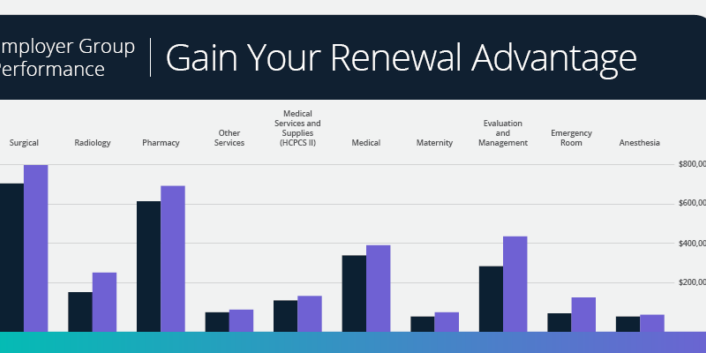
Renewal season is here. Are you defending premiums or demonstrating performance?
Employer healthcare analytics help health plans improve employer group performance Every renewal season, health plans meet with employers to discuss premium increases, review utilization trends, summarize claims experience, and highlight…
Continue reading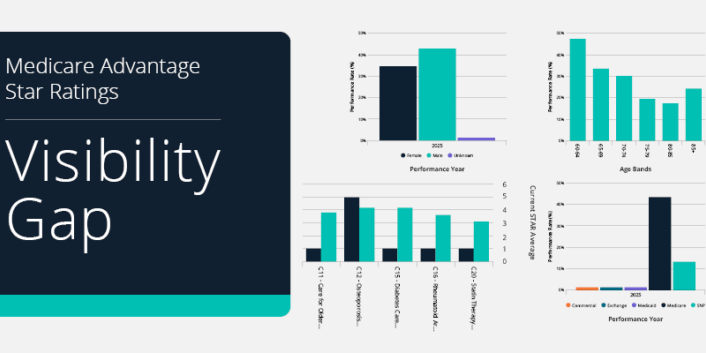
Beyond the recalculation: Building better Stars performance
The decision by the Centers for Medicare & Medicaid Services (CMS) to recalculate certain Medicare Advantage Star Ratings has generated understandable attention across the industry. I recently shared my perspective…
Continue reading
Beyond care gap closure: Rethinking clinical strategy in Medicare Advantage
Closing care gaps has become a core focus for Medicare Advantage plans for good reason. Gap closure directly impacts Star Ratings, quality performance, and reimbursement. It’s measurable, actionable, and tied to clear programmatic goals.…
Continue reading
From awareness to action: Unlocking the financial value of SDOH
Social determinants of health (SDOH) have become one of healthcare’s biggest strategic priorities, but many organizations still struggle with how to operationalize social risk data in a measurable, scalable way. In…
Continue reading
Enterprise analytics for Medicare Advantage: Why unified intelligence is the future of MA performance
Medicare Advantage organizations are facing growing pressure to improve quality outcomes, optimize financial performance, reduce compliance risk, and deliver better member experiences, all while managing increasingly complex operations. Yet many health plans still…
Continue reading
AHIP26: Turning healthcare complexity into measurable performance
Health plans are navigating rising medical costs, intensifying regulatory demands, margin pressure, evolving member expectations, and growing operational complexity, all while being expected to improve outcomes, affordability, and experience. These…
Continue reading