

Rural health transformation needs more than funding. It needs measurable results.
Rural health transformation succeeds when leaders can connect investments to measurable improvements in access, quality, cost, and sustainability. Doing so requires connected data, shared performance measures, and visibility across programs and organizations.
Why is measurement a priority for rural health transformation?
The 2026 Mississippi Healthcare Collaborative Conference will bring together policymakers, payers, providers, and community stakeholders to explore challenges and innovative solutions shaping healthcare across Mississippi. That collaborative approach is essential because no single organization can solve the state’s rural health issues alone.
Rural communities face overlapping challenges, including:
- Limited access to primary and specialty care
- Workforce shortages
- High chronic-disease burden
- Transportation barriers
- Financially vulnerable hospitals
To address these challenges, the Mississippi Rural Health Transformation Program includes initiatives spanning statewide assessment, regional care coordination, workforce development, health technology, telehealth, and infrastructure.
Participating organizations are expected to report progress, share data, and support program evaluation. But determining success will be difficult if every organization reports in isolation. Mississippi needs a connected view that shows how individual initiatives contribute to statewide access, quality, financial, and population health goals.
What should healthcare organizations measure first?
A useful accountability framework should connect four questions:
- Where is the need greatest?
- What action was taken?
- Did behavior or care delivery change?
- Did access, quality, cost, or sustainability improve?
Reports should combine claims, clinical, financial, operational, workforce, geographic, and social-risk data. If those sources remain separate, leaders cannot see how clinical needs, access barriers, utilization, operational capacity, and financial performance affect one another. They will also be unable to fully evaluate the program’s overall results.
How can analytics help leaders better utilize their limited resources?
The best analytics do more than describe past performance. They identify which populations, facilities, service lines, or communities have the greatest opportunity for improvement and estimate where an intervention could deliver the strongest impact.
Mississippi needs to unify clinical, claims, financial, operational, and social-risk information through a common healthcare data foundation. Predictive models and risk stratification can then help organizations identify rising-risk patients, avoidable utilization, access gaps, and high-cost patterns earlier. Leaders can prioritize interventions based on expected clinical value, financial impact, feasibility, and urgency.
How do organizations prove an intervention worked?
Every initiative should have a measurable chain from investment to outcome. That chain includes the resources deployed, the people reached, the actions completed, the near-term changes observed, and the long-term results produced.
For example:
- Funding a nurse-navigation program is an input.
- Completed outreach and scheduled follow-up visits are actions.
- Better continuity and fewer missed appointments are near-term changes.
- Reduced avoidable utilization and improved outcomes are results.
Tracking only the funding or number of calls does not show whether the program produced measurable value. Continuous performance monitoring is achievable by connecting initiative data with utilization, quality, cost, and population outcomes. Shared views also provide state agencies, providers, payers, and community partners a consistent basis for evaluating progress.
How does accountability support long-term sustainability?
Sustainable programs must demonstrate they improve outcomes, lower avoidable costs, strengthen revenue, or create enough operational value to continue after initial funding ends. Leaders must therefore be able to evaluate programs while they are underway.
If performance falls short, teams need enough detail to distinguish an ineffective intervention from weak adoption, incomplete outreach, insufficient capacity, or poor targeting. Early course correction protects resources and community trust.
The primary question asked should not be, “Did we spend the funds as planned?” Instead, it should be, “What changed for patients, providers, and communities, and is that change sustainable?”
Continuing the conversation at the Mississippi Healthcare Collaborative Conference
MedeAnalytics will attend the 2026 Mississippi Healthcare Collaborative Conference, September 27–30 in Fairhope, Alabama. We look forward to discussing how a shared analytics and performance infrastructure can help Mississippi identify high-impact opportunities, coordinate action, and demonstrate which rural health investments produce sustainable results.
If your organization is planning a rural health initiative, meet with the MedeAnalytics team at the conference to explore how unified data, predictive intelligence, and accountable workflows can help turn that investment into measurable improvement.


Where Medicare Advantage revenue leaks: The disconnect between RAF, Star Ratings, and MLR
Most Medicare Advantage revenue loss doesn’t show up where finance teams expect it. It’s not a single variance in a report or a clear miss against budget. It’s smaller, compounding gaps spread across risk adjustment, quality performance,…
Continue reading
Rural health transformation needs more than funding. It needs measurable results.
Rural health transformation succeeds when leaders can connect investments to measurable improvements in access, quality, cost, and sustainability. Doing so requires connected data, shared performance measures, and visibility across programs…
Continue reading
Why Medicare Advantage member churn is a lagging indicator
By the time a Medicare Advantage member switches plans, the conditions influencing that decision may have been developing for months. Retention problems often begin well before an enrollment period as…
Continue reading
The Medicare Advantage retention gap: Turning member experience into a growth strategy
Growth in Medicare Advantage has become increasingly difficult to sustain. Acquisition costs are rising, competition is intensifying, and members are more willing than ever to switch plans in search of…
Continue reading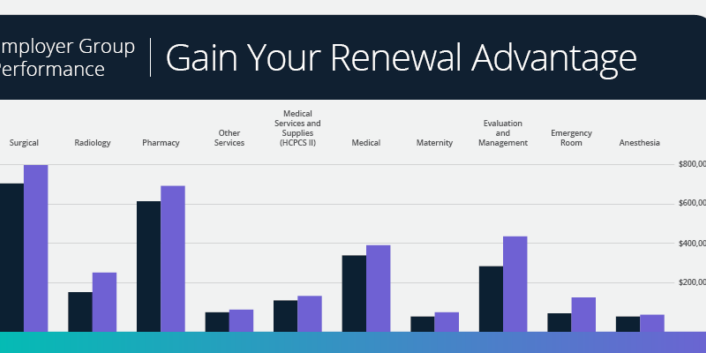
Renewal season is here. Are you defending premiums or demonstrating performance?
Employer healthcare analytics help health plans improve employer group performance Every renewal season, health plans meet with employers to discuss premium increases, review utilization trends, summarize claims experience, and highlight…
Continue reading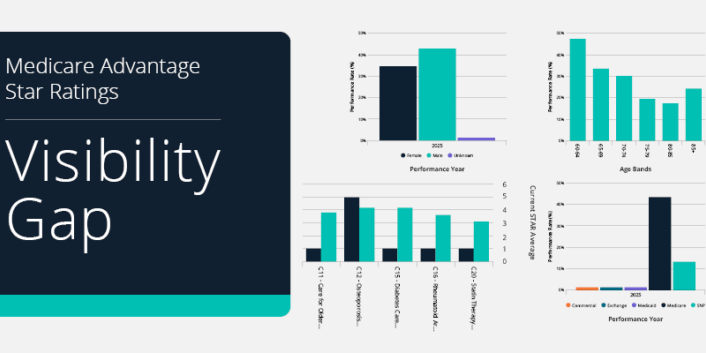
Beyond the recalculation: Building better Stars performance
The decision by the Centers for Medicare & Medicaid Services (CMS) to recalculate certain Medicare Advantage Star Ratings has generated understandable attention across the industry. I recently shared my perspective…
Continue reading
Beyond care gap closure: Rethinking clinical strategy in Medicare Advantage
Closing care gaps has become a core focus for Medicare Advantage plans for good reason. Gap closure directly impacts Star Ratings, quality performance, and reimbursement. It’s measurable, actionable, and tied to clear programmatic goals.…
Continue reading
From awareness to action: Unlocking the financial value of SDOH
Social determinants of health (SDOH) have become one of healthcare’s biggest strategic priorities, but many organizations still struggle with how to operationalize social risk data in a measurable, scalable way. In…
Continue reading
Enterprise analytics for Medicare Advantage: Why unified intelligence is the future of MA performance
Medicare Advantage organizations are facing growing pressure to improve quality outcomes, optimize financial performance, reduce compliance risk, and deliver better member experiences, all while managing increasingly complex operations. Yet many health plans still…
Continue reading
AHIP26: Turning healthcare complexity into measurable performance
Health plans are navigating rising medical costs, intensifying regulatory demands, margin pressure, evolving member expectations, and growing operational complexity, all while being expected to improve outcomes, affordability, and experience. These…
Continue reading