

Renewal season is here. Are you defending premiums or demonstrating performance?
Employer healthcare analytics help health plans improve employer group performance
Every renewal season, health plans meet with employers to discuss premium increases, review utilization trends, summarize claims experience, and highlight network strength and benefit enhancements. Employer healthcare analytics has become increasingly important in helping health plans demonstrate value beyond traditional reporting.
Employers are facing unprecedented healthcare cost pressures while balancing workforce expectations, economic uncertainty, and tighter budgets. They expect far more from their health plan than an explanation of what happened over the past year. Instead, they're asking:
- Why are our healthcare costs increasing?
- What are the biggest drivers behind those increases?
- How does our plan compare to similar organizations?
- What are you doing now to improve next year's performance?
- Why should we renew instead of exploring other options?
These aren't questions about reporting. They're questions about performance. They reflect a fundamental shift in what employers expect from their health plan partners.
The renewal conversation has changed
Historically, renewal discussions centered on three primary topics: premiums, provider networks, and benefit design.
Those elements still matter, but they are no longer enough to differentiate one health plan from another. Today's employers expect strategic guidance backed by employer healthcare analytics and actionable performance insights. They want partners who can help them manage healthcare costs, not simply explain them after they've occurred.
The most effective renewal conversations focus on understanding cost drivers, identifying emerging risks, evaluating performance against peers, and demonstrating a clear strategy for improvement. Employers want to know not only what happened, but what comes next and what their health plan is doing to improve future performance.
Employers increasingly expect objective context not just internal trend reports. Comparing their population with similar organizations helps distinguish between industry-wide cost pressures and opportunities unique to their workforce. That context gives employers greater confidence that recommendations are grounded in evidence rather than assumptions.
Looking back doesn't win renewals
Many health plans still rely on static employer healthcare reports filled with utilization summaries, claims breakdowns, and year-over-year comparisons. While those reports provide transparency, they rarely answer the question employers care about most: What can we do now to lower our future costs?
Explaining why costs increased last year doesn't change next year's trend, and reporting on high-cost claims after they've occurred doesn't help employers manage future financial risk. Nearly every health plan can produce retrospective dashboards and employer reporting analytics quarterly reports. The health plans that stand out help employers anticipate what's ahead and take action before costs escalate. Instead of simply saying, "Here's what happened," leading health plans are able to say:
- Here's what's likely to happen next.
- Here's why we're seeing these trends.
- Here's where the greatest opportunities exist.
- Here's what we should do now to improve next year's performance.
Instead of acting solely as an insurance carrier, the health plan becomes a strategic performance partner that helps employers make better decisions throughout the year.
How employer healthcare analytics improve performance
Supporting these conversations requires more than better reporting. It requires health plans to invest in capabilities that enable them to:
- Unify claims, pharmacy, clinical, financial, quality, and social risk data to create a complete view of employer performance
- Identify the underlying healthcare cost drivers rather than simply reporting utilization trends
- Benchmark employer performance against similar organizations to provide meaningful context
- Detect emerging risks early so interventions can begin before costs escalate
- Measure the impact of care management programs and other initiatives to demonstrate measurable value
These capabilities equip account teams and consultants with timely, connected insights that enable more strategic conversations with employers throughout the year. Rather than relying on static reports, they can discuss where risk is emerging, which opportunities are likely to have the greatest impact, and how success will be measured over time.
The future of renewals is about performance
Renewal season will always include conversations about premiums, but premiums alone no longer determine whether employers stay. Increasingly, employers are evaluating whether their health plan provides the insight, guidance, and partnership needed to improve healthcare performance year after year.
Health plans that help employers understand what's ahead, act earlier, and continuously improve performance deliver a fundamentally different value proposition built on measurable outcomes rather than premium price. That's the difference between defending a renewal and earning one.
Go beyond reporting to strengthen employer retention
Learn how leading health plans are transforming employer reporting into a performance management strategy that helps identify risks earlier, guide action, demonstrate measurable value, and strengthen employer relationships. Download the white paper: Beyond Reporting: Why Employer Performance Management Is Becoming a Health Plan’s Most Important Retention Strategy.


Rural Health Transformation Needs More Than Funding. It Needs Measurable Results.
Rural health transformation succeeds when leaders can connect investments to measurable improvements in access, quality, cost, and sustainability. Doing so requires connected data, shared performance measures, and visibility across programs…
Continue reading
Why Medicare Advantage member churn is a lagging indicator
By the time a Medicare Advantage member switches plans, the conditions influencing that decision may have been developing for months. Retention problems often begin well before an enrollment period as…
Continue reading
The Medicare Advantage retention gap: Turning member experience into a growth strategy
Growth in Medicare Advantage has become increasingly difficult to sustain. Acquisition costs are rising, competition is intensifying, and members are more willing than ever to switch plans in search of…
Continue reading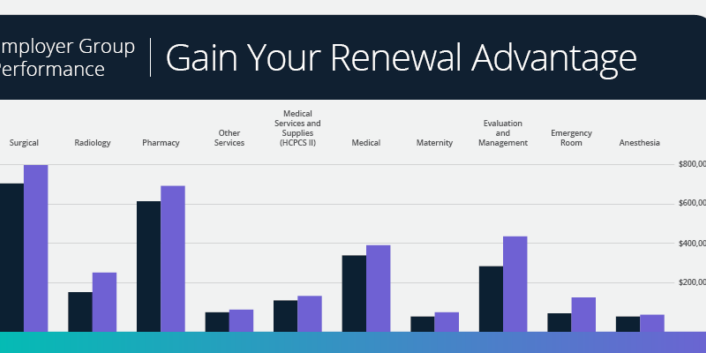
Renewal season is here. Are you defending premiums or demonstrating performance?
Employer healthcare analytics help health plans improve employer group performance Every renewal season, health plans meet with employers to discuss premium increases, review utilization trends, summarize claims experience, and highlight…
Continue reading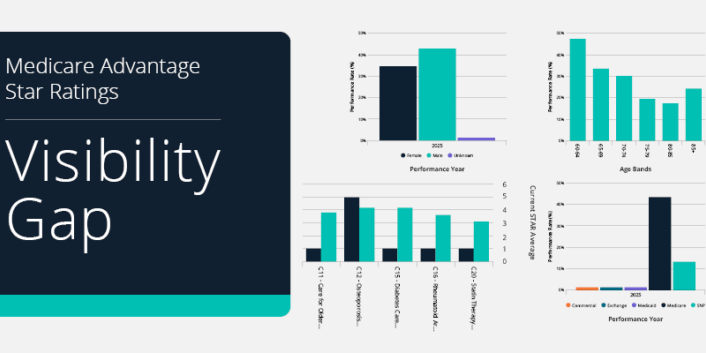
Beyond the recalculation: Building better Stars performance
The decision by the Centers for Medicare & Medicaid Services (CMS) to recalculate certain Medicare Advantage Star Ratings has generated understandable attention across the industry. I recently shared my perspective…
Continue reading
Beyond care gap closure: Rethinking clinical strategy in Medicare Advantage
Closing care gaps has become a core focus for Medicare Advantage plans for good reason. Gap closure directly impacts Star Ratings, quality performance, and reimbursement. It’s measurable, actionable, and tied to clear programmatic goals.…
Continue reading
From awareness to action: Unlocking the financial value of SDOH
Social determinants of health (SDOH) have become one of healthcare’s biggest strategic priorities, but many organizations still struggle with how to operationalize social risk data in a measurable, scalable way. In…
Continue reading
Enterprise analytics for Medicare Advantage: Why unified intelligence is the future of MA performance
Medicare Advantage organizations are facing growing pressure to improve quality outcomes, optimize financial performance, reduce compliance risk, and deliver better member experiences, all while managing increasingly complex operations. Yet many health plans still…
Continue reading
Where Medicare Advantage revenue leaks: The disconnect between RAF, Star Ratings, and MLR
Most Medicare Advantage revenue loss doesn’t show up where finance teams expect it. It’s not a single variance in a report or a clear miss against budget. It’s smaller, compounding gaps spread across risk adjustment, quality performance,…
Continue reading
AHIP26: Turning healthcare complexity into measurable performance
Health plans are navigating rising medical costs, intensifying regulatory demands, margin pressure, evolving member expectations, and growing operational complexity, all while being expected to improve outcomes, affordability, and experience. These…
Continue reading