

Employer reporting should prepare you for renewal long before renewal season
For many health plans, employer reporting still revolves around a familiar milestone: the renewal meeting. Teams assemble claims data, summarize utilization, explain cost trends, and prepare recommendations designed to demonstrate the plan’s value.
But by the time an emerging risk appears in a renewal presentation, the best opportunity to address it may have already passed.
Employer groups increasingly expect their health plan to help them understand not only what happened, but also what is beginning to change, why it matters, and what they can do about it. Meeting that expectation requires more than modernizing the report itself. It requires making employer reporting part of a continuous performance-management strategy.
Renewal readiness should be a year-round process
A strong renewal story is rarely created during the weeks leading up to the meeting. It develops throughout the year as the health plan identifies emerging risks, recommends appropriate interventions, monitors participation, and measures results.
This creates a continuous cycle:
- Establish a baseline for cost, utilization, risk, and outcomes
- Identify meaningful changes within the population
- Investigate the members, conditions, services, or locations driving those changes
- Recommend targeted programs or benefit strategies
- Monitor engagement and results
- Refine the approach based on what the data reveals
When this cycle is embedded into regular client conversations, the renewal meeting becomes an opportunity to document progress and set new priorities rather than explain unexpected results.
It also changes the role of the account team. Instead of delivering reports, account managers can help employers interpret performance, evaluate options, and make more confident decisions.
Look beyond group-level averages
High-level metrics are useful for showing overall direction, but they can also conceal important differences within an employer population.
A rising cost trend, for example, may be concentrated among employees in one location, dependents in a particular age group, members with a specific chronic condition, or people receiving care in higher-cost settings. Two populations with similar total spending may require entirely different responses.
Segmenting performance by factors such as geography, demographic characteristics, condition prevalence, care setting, and member classification provides the context needed to determine where intervention is possible and likely to produce value.
This is especially important when evaluating high-cost claimants. A broad cost threshold may identify a large cohort, but not every member within that cohort presents the same opportunity. Some costs may already be unavoidable, while other members may be showing early signs of escalating risk. Predictive analytics and risk stratification can help plans distinguish between those populations and prioritize resources accordingly.
Connect recommendations to measurable outcomes
Identifying an opportunity is only the beginning. Employers also need to understand whether the recommended response worked.
Suppose analytics reveal that musculoskeletal conditions are a major cost driver and that the population has strong engagement with virtual care. That combination may support a targeted virtual musculoskeletal program. But demonstrating value requires measurement beyond enrollment.
The health plan should be able to evaluate whether the program affected procedure costs, complications, missed workdays, member engagement, satisfaction, and other relevant outcomes. It should also establish a baseline before implementation so results can be assessed against a meaningful starting point.
The same principle applies to case management, condition management, behavioral health, specialty pharmacy, and wellness programs. Connecting program participation with subsequent cost, utilization, and outcome data helps employers determine which investments are working, which populations remain underserved, and where adjustments are needed.
Give employers the right level of access
Self-service analytics can strengthen employer and broker relationships, but self-service should not mean leaving users alone with a dashboard.
The most effective reporting environments support different levels of engagement. Some users may want a concise executive view of major trends and opportunities. Others may need to explore results by population, condition, or location. Internal analysts and account teams may require even deeper capabilities.
A shared analytics foundation allows these audiences to work from the same trusted information while accessing the level of detail appropriate to their roles. It also makes client conversations more productive. When a question arises, teams can explore the data during the discussion instead of submitting a new reporting request and waiting for a response.
Turn every employer conversation into evidence of value
Employer reporting becomes a competitive differentiator when it creates a clear connection between information, action, and results.
That means replacing isolated reports with an ongoing record of the risks identified, decisions made, programs implemented, and outcomes achieved. Over time, this record gives employers and brokers greater visibility into the value their health plan provides beyond network access and premium price.
In the on-demand webinar, “How Highmark Is Turning Employer Reporting Into a Competitive Edge for National Accounts,” leaders from Highmark and MedeAnalytics share how Highmark is using unified data, predictive intelligence, interactive reporting, and measurable outcomes to support more strategic employer relationships.
Watch the webinar to see how this approach works in practice and explore how your organization can move from retrospective reporting to proactive employer performance management.

Employer reporting should prepare you for renewal long before renewal season
For many health plans, employer reporting still revolves around a familiar milestone: the renewal meeting. Teams assemble claims data, summarize utilization, explain cost trends, and prepare recommendations designed to demonstrate…

Where Medicare Advantage revenue leaks: The disconnect between RAF, Star Ratings, and MLR
Most Medicare Advantage revenue loss doesn’t show up where finance teams expect it. It’s not a single variance in a report or a clear miss against budget. It’s smaller, compounding gaps spread across risk adjustment, quality performance,…

Becker’s Fall Payer Issues Roundtable: The Next Competitive Advantage Isn’t More Data. It’s Measurable Performance.
Healthcare payers have never had more data, analytics, technology, or AI available to them. Yet for many organizations, achieving meaningful performance improvement remains as difficult as ever. That reality is…

Rural health transformation needs more than funding. It needs measurable results.
Rural health transformation succeeds when leaders can connect investments to measurable improvements in access, quality, cost, and sustainability. Doing so requires connected data, shared performance measures, and visibility across programs…

Why Medicare Advantage member churn is a lagging indicator
By the time a Medicare Advantage member switches plans, the conditions influencing that decision may have been developing for months. Retention problems often begin well before an enrollment period as…

The Medicare Advantage retention gap: Turning member experience into a growth strategy
Growth in Medicare Advantage has become increasingly difficult to sustain. Acquisition costs are rising, competition is intensifying, and members are more willing than ever to switch plans in search of…
Renewal season is here. Are you defending premiums or demonstrating performance?
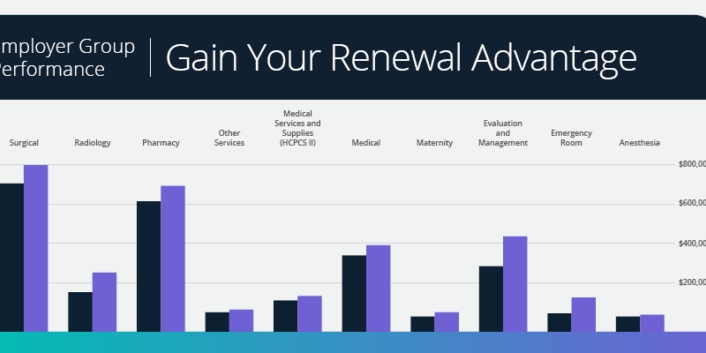
Employer healthcare analytics help health plans improve employer group performance Every renewal season, health plans meet with employers to discuss premium increases, review utilization trends, summarize claims experience, and highlight…
Beyond the recalculation: Building better Stars performance
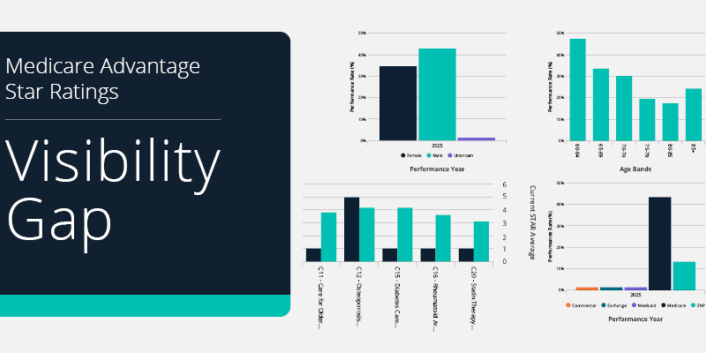
The decision by the Centers for Medicare & Medicaid Services (CMS) to recalculate certain Medicare Advantage Star Ratings has generated understandable attention across the industry. I recently shared my perspective…

Beyond care gap closure: Rethinking clinical strategy in Medicare Advantage
Closing care gaps has become a core focus for Medicare Advantage plans for good reason. Gap closure directly impacts Star Ratings, quality performance, and reimbursement. It’s measurable, actionable, and tied to clear programmatic goals.…

From awareness to action: Unlocking the financial value of SDOH
Social determinants of health (SDOH) have become one of healthcare’s biggest strategic priorities, but many organizations still struggle with how to operationalize social risk data in a measurable, scalable way. In…