
Why Healthcare Should “Double-Down” on Exploring AI-powered BI for Reporting


Not understanding data often is the difference between success and failure.
- Between positive and negative health outcomes.
- Between improving and worsening patient satisfaction.
- Between increasing or decreasing revenue.
Many areas in healthcare rely not only on the collection of data but, importantly, the ability to decipher and act upon it. In that intersection, reporting was born. After the advent of reporting, healthcare organizations looked to business intelligence to understand and act more quickly on the information created by data.
A new three-part article by MedeAnalytics President Scott Hampel focuses on reporting trends in healthcare. Learn why healthcare organizations must transition from manual reporting to AI-fueled predictive analytics.

Get our take on industry trends

Why Medicare Advantage member churn is a lagging indicator
By the time a Medicare Advantage member switches plans, the conditions influencing that decision may have been developing for months.…
Read on...
The Medicare Advantage retention gap: Turning member experience into a growth strategy
Growth in Medicare Advantage has become increasingly difficult to sustain. Acquisition costs are rising, competition is intensifying, and members are…
Read on...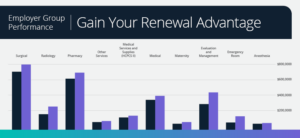
Renewal season is here. Are you defending premiums or demonstrating performance?
Employer healthcare analytics help health plans improve employer group performance Every renewal season, health plans meet with employers to discuss…
Read on...
Beyond the recalculation: Building better Stars performance
The decision by the Centers for Medicare & Medicaid Services (CMS) to recalculate certain Medicare Advantage Star Ratings has generated…
Read on...